Natural Disasters and Commercial Insurance
 Author Peter Katkov | Founder | Peter Katkov is the Founder and CEO of Apex Risk & Insurance Services, a boutique commercial insurance brokerage headquartered in Carlsbad, CA. Peter founded Apex to bring high-touch, client-focused risk mitigation back to San Diego business owners. Apex specializes in hard to place coverage for industries ranging from construction and hospitality to wave pools and life sciences.
Natural disasters continue to create major financial and operational challenges for businesses across the country. Severe storms, floods, wildfires, earthquakes, and hurricanes can interrupt operations, damage property, impact employees, and create long recovery timelines.
Commercial insurance plays an important role in helping businesses prepare for these events and recover more effectively when losses occur. The structure of a policy, the location of the business, and the type of exposures involved all influence how coverage responds following a natural disaster.
Businesses that regularly review their insurance program are often better positioned to respond quickly, manage downtime, and protect long-term operations.
Why Natural Disaster Coverage Matters for Businesses
Natural disasters can affect far more than physical property. A major event can interrupt revenue, delay projects, impact employees, disrupt supply chains, and create operational challenges that continue long after repairs are completed.
For many businesses, recovery depends on how well insurance coverage aligns with actual exposures. Commercial property coverage, business income protection, equipment coverage, and specialized policies all contribute to a broader risk management strategy.
Business owners should review how their policies address property damage, operational interruptions, extra expenses during recovery periods, and the financial impact of temporary closures. A strong insurance strategy helps businesses prepare for both immediate losses and long-term recovery efforts.
Standard Commercial Insurance vs. Separate Disaster Policies
Commercial insurance policies often include protection for certain natural disaster-related losses, but some exposures may require separate policies or endorsements.
Coverage depends on several factors, including geographic location, building construction, local weather patterns, operational risk, and carrier underwriting requirements. Businesses should review policies carefully to understand where separate coverage may apply and whether additional protection is needed for specific exposures.
Hurricane and Windstorm Coverage
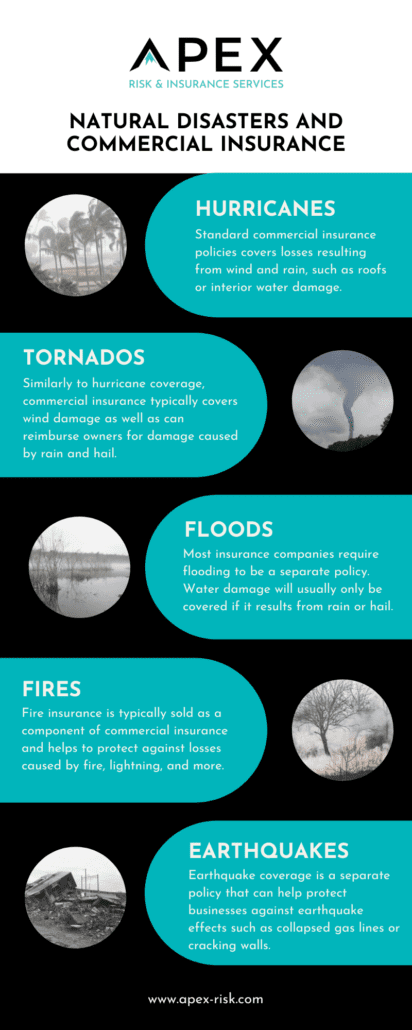
Many commercial property policies include coverage for wind-related damage. This can include roof damage, broken windows, exterior structural damage, and interior water damage caused by
wind-driven rain.
However, flood-related losses are typically excluded from standard property policies. Businesses located in coastal or flood-prone regions often require a separate flood insurance policy to protect against water-related losses.
Businesses in hurricane-prone regions should also evaluate emergency preparedness measures such as backup power systems, data protection procedures, equipment protection strategies, and response planning to support operational continuity after a major storm.
Tornado and Severe Weather Coverage
Tornadoes and severe wind events can create sudden and extensive property damage. Commercial insurance policies commonly respond to structural damage, hail impacts, wind-related losses, and certain types of water intrusion caused by storm damage.
Coverage terms can vary depending on deductibles, valuation methods, and policy exclusions, making regular policy reviews important for businesses located in high-risk weather regions.
Flood Insurance for Commercial Businesses
Flooding remains one of the most common and costly natural disaster exposures for businesses. Flood events can result from hurricanes, heavy rainfall, overflowing rivers, storm surge, and
drainage system failures.
Standard commercial property insurance generally does not include flood coverage. Businesses often need a dedicated flood insurance policy to protect buildings, inventory, equipment, and certain operational losses.
Businesses should also periodically evaluate their flood exposure based on property location, surrounding infrastructure, historical flooding patterns, and changes in local development or drainage systems.
Fire and Wildfire Insurance Considerations
Fire coverage is commonly included within commercial property insurance policies and may apply to structural damage, smoke damage, certain cleanup costs, and emergency property removal during a covered event.
For businesses operating in wildfire-prone regions, insurance availability and pricing continue to shift as carriers evaluate changing risk conditions. Updated property valuations, vegetation management, and building protection measures can all influence underwriting and long-term insurability.
Earthquake Insurance for Commercial Properties
Earthquake coverage is typically purchased separately from standard commercial property insurance. Coverage may help address structural damage, interior damage, debris removal, equipment losses, and other earthquake-related impacts.
Businesses located in earthquake-prone states should review both coverage limits and deductible structures carefully, as earthquake deductibles are often significantly different from standard
property claims.
Business Income Insurance and Operational Recovery
Business income insurance, also referred to as business interruption insurance, can help businesses recover lost income during covered shutdown periods.
This coverage may help support ongoing operating expenses, payroll obligations, temporary relocation costs, and revenue interruptions while repairs are completed following a covered loss. For many businesses, maintaining operational continuity during recovery can be just as important as repairing physical damage.
Insurance planning also works best alongside broader business continuity planning. Emergency communication procedures, backup vendors, operational contingency plans, and data protection systems can all support faster recovery and more stable operations following a disaster event.
Reviewing Your Commercial Insurance Strategy
Natural disaster exposure continues to evolve across many industries and regions. Businesses that proactively review coverage, property valuations, operational risks, and recovery planning are often better positioned to respond when unexpected events occur.
A commercial insurance program should support both immediate protection and long-term operational stability. Regular policy reviews and strategic risk management discussions can help businesses strengthen preparedness, reduce disruption, and support a more resilient recovery process.
Contact Apex Risk & Insurance Services to review your commercial insurance strategy and build a coverage plan aligned with your business operations, disaster exposures, and long-term recovery goals.